

Illinois Is Moving Toward Plastic-Free Erosion Control Blankets
Illinois transportation and environmental guidance now shows a clear shift away from plastic netting in erosion control blankets and toward natural, biodegradable alternatives. The change is being driven by environmental concerns, wildlife protection, and the practical benefits of materials that break down after construction.
What IDOT changed
The Illinois Department of Transportation says that after a two-year study with the Illinois Center for Transportation, its Bureau of Design and Environment began using plastic-free erosion control blankets on projects throughout the state. IDOT also states that, as of Aug. 1, 2025, all of its erosion control blankets are plastic-free.
IDOT adds that the new wildlife-friendly option uses a sliding netting design for projects near threatened and endangered species. The agency also says it has already received inquiries from other DOTs, which suggests the change is drawing outside attention.
Why the change matters
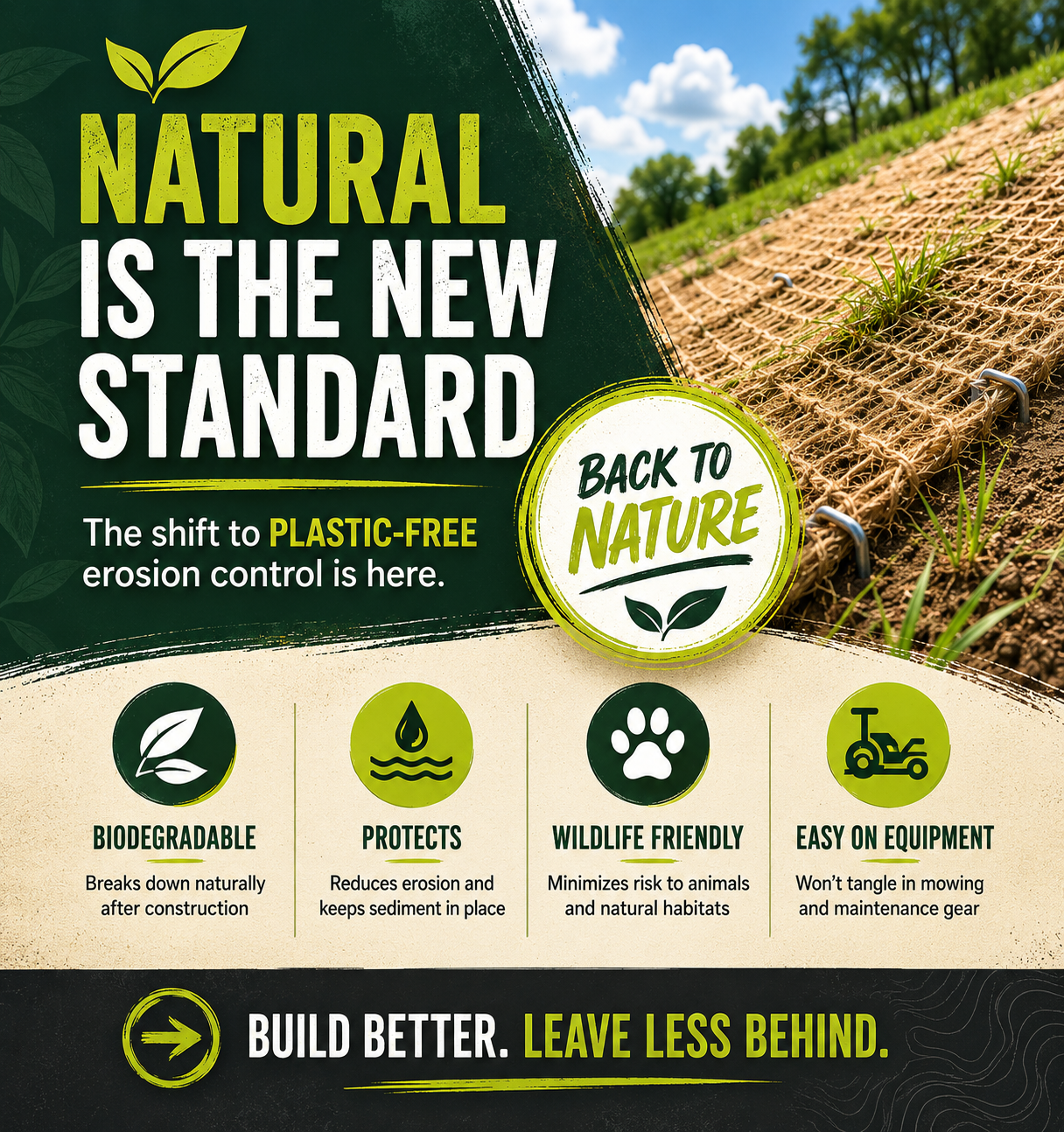
IDOT says plastic-free blankets reduce equipment maintenance problems because natural materials do not get tangled in mowing and maintenance equipment. More importantly, the agency says they reduce microplastics in waterways and provide wildlife-friendly solutions.
That lines up with federal wildlife guidance, which recommends temporary erosion and sediment control products made from 100 percent biodegradable natural fibers such as jute, sisal, or coir. The U.S. Fish and Wildlife Service also says plastic netting marketed as degradable, photodegradable, UV-degradable, oxo-degradable, or oxo-biodegradable is not an acceptable alternative.
Why agencies are moving
This is not just an Illinois issue. IDOT describes a growing industry trend toward natural, nonplastic erosion-control products. The National Academies also notes that DOTs are increasingly considering material composition when reviewing sustainable erosion and sediment control options.
The reasons are fairly consistent across sources: lower wildlife risk, less plastic debris, and less long-term cleanup after projects are finished. Wildlife-safe guidance emphasizes loose-weave, non-welded natural netting because it reduces entanglement risk for snakes, birds, and other animals.
How to interpret UV degradation
UV-related labeling is part of the issue, but mostly as a warning rather than a benefit. Federal wildlife guidance rejects UV-degradable and photodegradable plastic netting because these materials still count as plastic and do not solve the wildlife or debris problem. In other words, “degradable” plastic netting is not the same thing as truly biodegradable natural fiber netting.
Bottom line
Illinois appears to be part of a broader public-sector move toward natural netting because it addresses three concerns at once: wildlife entanglement, microplastic pollution, and the long-term cleanup burden of plastic materials left behind after construction. The state’s shift looks significant, and the fact that other DOTs are already asking questions suggests the trend is likely to keep growing.
Sources
- Illinois Department of Transportation, “Return to nature: breaking down the new plastic-free erosion control blankets,” April 29, 2026.
- U.S. Fish and Wildlife Service, “Make the Change to Wildlife-Friendly Erosion Control Products!”.
- National Academies, “Use of Sustainable Materials for Erosion and Sediment Control”.
- Environmental Conservation Council article on wildlife and environmentally friendly rolled erosion control products.
