Channel Installation Guide
Channel Installation That Controls Flow
Built to Hold Under Concentrated Water
Channel installations leave little margin for error because water gains speed, depth, and force as it moves through confined paths.more-space. Small installation mistakes can turn into system failures once flow increases. Ero-Guard channel installation practices are built to control that energy, keeping rolled erosion control products secured, aligned with flow, and firmly anchored so they stay in place when hydraulic pressure rises and conditions test the system.
Channel Installation Performance Priorities
Channel installations succeed or fail at a handful of critical control points. When these elements are addressed intentionally, erosion control systems stay intact under flow, pressure, and changing site conditions.
- Channel preparation sets the foundation for control
A channel that is shaped correctly allows the blanket to work with flow instead of being undermined by it. Smooth grading and uniform soil contact prevent voids and bridging, which are the first places water will exploit once velocity increases.
- Upstream anchoring establishes authority over flow
The start of the channel is where water looks for leverage. A properly built anchor trench creates a hard boundary that keeps flow on top of the system and protects every section downstream from early failure.
- Alignment with flow keeps pressure on the surface
Blankets that follow the natural direction of water allow flow to ride the surface instead of building pressure underneath. Continuous contact and secure anchoring keep the system pinned as velocity and volume increase.
- Overlaps function as structural connections, not seams
In channels, overlaps carry load. Shingle-style placement and reinforced fastening force water to stay above the system and allow multiple blankets to perform as one continuous surface under sustained flow.
- Transitions to side slopes determine long-term stability
Most channel failures begin where the system meets the slope. Treating the channel and side slopes as a single connected system prevents water from cutting behind the blanket and breaking continuity under shifting conditions.
- Reinforcement controls high-energy sections
As flow accelerates, unchecked movement compounds quickly. Segmenting channels with reinforcement points interrupts lift, reduces stress, and keeps the blanket secured where velocity pushes hardest.
Finish With a Secure Downstream Anchor
The end of the channel is where uncontrolled lift and pull can undo an otherwise solid installation. Locking the system down at the exit point prevents water from grabbing the blanket and peeling it back once flow accelerates out of the channel.
When this final anchor is set correctly, Ero-Guard erosion control blankets stay aligned, resist uplift, and continue performing under concentrated flow where failure most often begins.
Need help applying these practices to a specific site or flow condition?
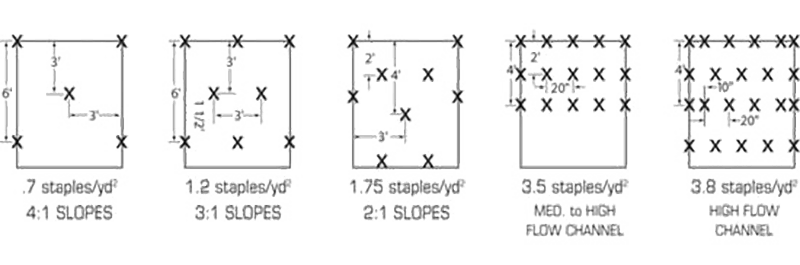
Connect with the Ero-Guard team to review channel layout, staple patterns, and installation strategies that keep erosion control systems performing when water is moving fast and margins are tight.